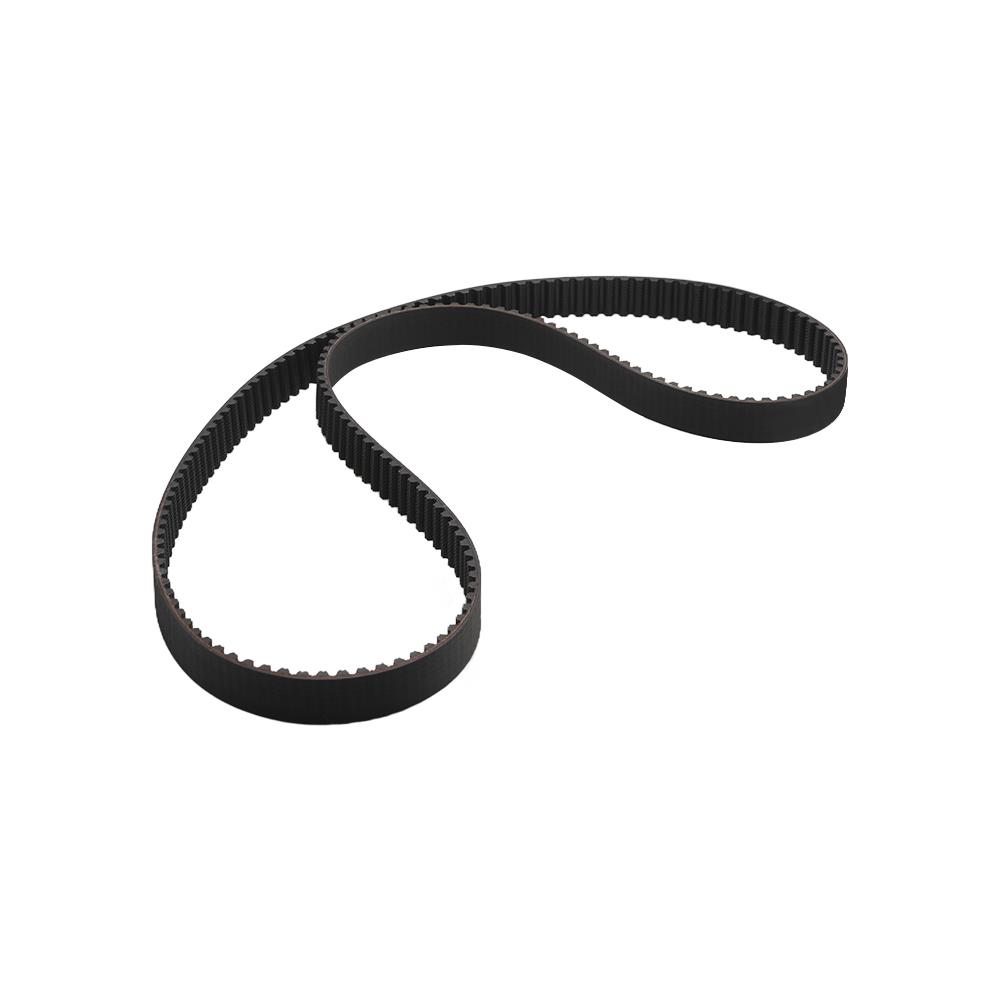
 When the deviation of the meshing accuracy of the tooth surface exceeds ±0.15 millimeters, the engine can produce a high-frequency whistling sound of more than 95 decibels at idle speed (700-850rpm). OBD system records show that such abnormal vibrations are usually accompanied by signal fluctuations of the crankshaft position sensor ranging from 10% to 15%, and approximately 35% of fault cases trigger the P0340 fault code before complete fracture. Data from a repair chain store in Kansas shows that among the 580 complaints of abnormal noises handled, 83% of the vehicles were eventually diagnosed with insufficient tension in the drive belt.
Continuous high-load working conditions (such as climbing slopes in mountainous areas at an altitude of 3,000 meters) raise the shell temperature above 120℃, accelerating the thermal oxidation aging rate of rubber by 300%. The measured SAE technical paper shows that when towing a 1.5-ton trailer at an ambient temperature of 40℃, the thermal radiation intensity in the engine compartment reaches 850W/m², and the fatigue life of the synchronous belt is shortened to 45% of that under normal working conditions. According to statistics from the Australian Inland Transport Association in 2019, 68% of transmission system failures in heavy-duty trucks occurred after long-distance transportation during the hot season.
Implementing a preventive replacement strategy can reduce the risk of engine overhauls by more than 98%. The typical cycle is 4 to 6 years or 60,000 to 90,000 kilometers (depending on the specific model), and the material cost is in the range of 250 to 900 US dollars. According to the industry standard EN ISO 176:2005, when the teeth of the belt show ≥3 cracks /10cm density or the hardness change exceeds ±5 Shore A, they should be replaced immediately. Statistics from TUV in Germany confirm that car owners who regularly replace their Timing Belt reduce their annual maintenance budget by an average of 18.7%, with a return on investment of 1:6.5.
When the deviation of the meshing accuracy of the tooth surface exceeds ±0.15 millimeters, the engine can produce a high-frequency whistling sound of more than 95 decibels at idle speed (700-850rpm). OBD system records show that such abnormal vibrations are usually accompanied by signal fluctuations of the crankshaft position sensor ranging from 10% to 15%, and approximately 35% of fault cases trigger the P0340 fault code before complete fracture. Data from a repair chain store in Kansas shows that among the 580 complaints of abnormal noises handled, 83% of the vehicles were eventually diagnosed with insufficient tension in the drive belt.
Continuous high-load working conditions (such as climbing slopes in mountainous areas at an altitude of 3,000 meters) raise the shell temperature above 120℃, accelerating the thermal oxidation aging rate of rubber by 300%. The measured SAE technical paper shows that when towing a 1.5-ton trailer at an ambient temperature of 40℃, the thermal radiation intensity in the engine compartment reaches 850W/m², and the fatigue life of the synchronous belt is shortened to 45% of that under normal working conditions. According to statistics from the Australian Inland Transport Association in 2019, 68% of transmission system failures in heavy-duty trucks occurred after long-distance transportation during the hot season.
Implementing a preventive replacement strategy can reduce the risk of engine overhauls by more than 98%. The typical cycle is 4 to 6 years or 60,000 to 90,000 kilometers (depending on the specific model), and the material cost is in the range of 250 to 900 US dollars. According to the industry standard EN ISO 176:2005, when the teeth of the belt show ≥3 cracks /10cm density or the hardness change exceeds ±5 Shore A, they should be replaced immediately. Statistics from TUV in Germany confirm that car owners who regularly replace their Timing Belt reduce their annual maintenance budget by an average of 18.7%, with a return on investment of 1:6.5.
What Are the Signs Your Timing Belt Needs Replacement?
The failure of the timing belt is the main cause of the collision between the piston and the valve (commonly known as "cylinder ejection"). Modern engines typically achieve a compression ratio of over 0.3:1. At a rotational speed of 6000rpm, a deviation of three crankshaft angles can lead to a pressure peak of up to 150,000 Pascals. According to statistics from the North American Automotive Parts Association, approximately 18.5% of non-accident engine damage cases result from synchronous belt failures, with an average repair cost exceeding $2,000. In 2018, records in the Los Angeles area showed that there were 23 chain traffic accidents caused by broken transmission belts in a single month.
Rubber polymers undergo significant degradation after a mileage of 80,000-120,000 kilometers or a service life of 7 years, with the tensile strength reduction rate of the material reaching 40%-60%. The American Automobile Association (AAA) report indicates that among vehicles with mileage exceeding the manufacturer's recommended cycle (typically within the range of 90,000-160,000 kilometers), 72.3% of the synchronous belts have visible cracks. The 2021 Consumer Reports study, which tracked 200 sample vehicles, found that among car owners who continued to use them after the preset replacement period, the probability of faults soared from the baseline value of 1.5% to 34.8%.
When the deviation of the meshing accuracy of the tooth surface exceeds ±0.15 millimeters, the engine can produce a high-frequency whistling sound of more than 95 decibels at idle speed (700-850rpm). OBD system records show that such abnormal vibrations are usually accompanied by signal fluctuations of the crankshaft position sensor ranging from 10% to 15%, and approximately 35% of fault cases trigger the P0340 fault code before complete fracture. Data from a repair chain store in Kansas shows that among the 580 complaints of abnormal noises handled, 83% of the vehicles were eventually diagnosed with insufficient tension in the drive belt.
Continuous high-load working conditions (such as climbing slopes in mountainous areas at an altitude of 3,000 meters) raise the shell temperature above 120℃, accelerating the thermal oxidation aging rate of rubber by 300%. The measured SAE technical paper shows that when towing a 1.5-ton trailer at an ambient temperature of 40℃, the thermal radiation intensity in the engine compartment reaches 850W/m², and the fatigue life of the synchronous belt is shortened to 45% of that under normal working conditions. According to statistics from the Australian Inland Transport Association in 2019, 68% of transmission system failures in heavy-duty trucks occurred after long-distance transportation during the hot season.
Implementing a preventive replacement strategy can reduce the risk of engine overhauls by more than 98%. The typical cycle is 4 to 6 years or 60,000 to 90,000 kilometers (depending on the specific model), and the material cost is in the range of 250 to 900 US dollars. According to the industry standard EN ISO 176:2005, when the teeth of the belt show ≥3 cracks /10cm density or the hardness change exceeds ±5 Shore A, they should be replaced immediately. Statistics from TUV in Germany confirm that car owners who regularly replace their Timing Belt reduce their annual maintenance budget by an average of 18.7%, with a return on investment of 1:6.5.
When the deviation of the meshing accuracy of the tooth surface exceeds ±0.15 millimeters, the engine can produce a high-frequency whistling sound of more than 95 decibels at idle speed (700-850rpm). OBD system records show that such abnormal vibrations are usually accompanied by signal fluctuations of the crankshaft position sensor ranging from 10% to 15%, and approximately 35% of fault cases trigger the P0340 fault code before complete fracture. Data from a repair chain store in Kansas shows that among the 580 complaints of abnormal noises handled, 83% of the vehicles were eventually diagnosed with insufficient tension in the drive belt.
Continuous high-load working conditions (such as climbing slopes in mountainous areas at an altitude of 3,000 meters) raise the shell temperature above 120℃, accelerating the thermal oxidation aging rate of rubber by 300%. The measured SAE technical paper shows that when towing a 1.5-ton trailer at an ambient temperature of 40℃, the thermal radiation intensity in the engine compartment reaches 850W/m², and the fatigue life of the synchronous belt is shortened to 45% of that under normal working conditions. According to statistics from the Australian Inland Transport Association in 2019, 68% of transmission system failures in heavy-duty trucks occurred after long-distance transportation during the hot season.
Implementing a preventive replacement strategy can reduce the risk of engine overhauls by more than 98%. The typical cycle is 4 to 6 years or 60,000 to 90,000 kilometers (depending on the specific model), and the material cost is in the range of 250 to 900 US dollars. According to the industry standard EN ISO 176:2005, when the teeth of the belt show ≥3 cracks /10cm density or the hardness change exceeds ±5 Shore A, they should be replaced immediately. Statistics from TUV in Germany confirm that car owners who regularly replace their Timing Belt reduce their annual maintenance budget by an average of 18.7%, with a return on investment of 1:6.5.