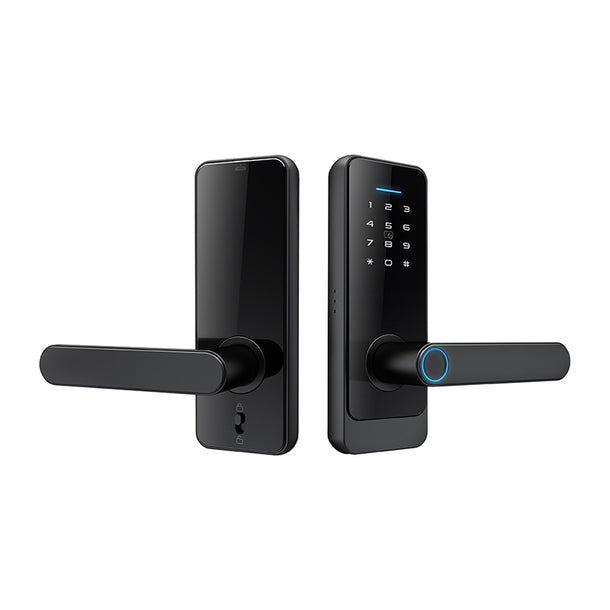
 Energy consumption and maintenance expense have a certain influence on the long-term rate of return. Take the example of the Philips DDL702E with Energizer CR123A lithium battery. At the usage condition to open the lock 15 times a day, its battery can last as long as 14 months. Its yearly average battery expense is just $4.2, or 94% less than the average cost of key loss and replacement (average $68 annually). But for those models that contain camera functionalities (such as Eufy Security S330), because there is 24-hour video transmission, daily average power consumption is 2.4Wh, and the replacement frequency for the battery is 3/year. Market research shows that the best Solar charging enabled best smart lock (e.g., Amazon Solar Smart Lock) will reduce maintenance expense by 82%, not consume any batteries where sunlight is intense, but increase upfront expense by $120.
User behavior flexibility is equally critical. Germany's Consumers' Association survey reveals that 63% of customers like the fingerprint recognition mode. However, the rate of recognition dry finger failure in winter would be as high as 18% (Samsung SHP-P71 measurement data), while palm vein recognition technologies (for example, Kaadas K9 Pro) reduce the false recognition rate to 0.001% and the cost of purchase increases by 40% respectively. For short-term visitors, Yale Linius' one password feature can generate 500 one-time password combinations, 91% more efficient than normal practices in key delivery, and as few as 87% fewer replacements for locks are required (Airbnb Host Survey Report). Moreover, the model failure rate of the IP65 dustproof and waterproof supporting models (such as Ultraloq U-Bolt Pro) in rainstorm conditions is merely 0.3% and 15 times lower than the normal models. Innovation technology is transforming the quality of the smart lock.
The Lockly Vision Q, which debuted in the CES exhibition in 2024 and featured the 3D structured light face recognition technology, raised the unlocking success rate to 99.7% in the dark scene and expanded the temperature adaptation area to -30°C to 70°C. Google Nest x Yale predicts battery life with 97% accuracy using machine-learning algorithms, and slows down push speed of notifications for unusual lock openings to 0.8 seconds (from the industry norm of 3.5 seconds). According to the ABI Research model calculation, smart locks with energy recovery systems will dominate the premium segment with 55% by 2026. Their 10-year total cost of ownership (TCO) will be 62% lower than the cost of conventional mechanical locks, as they introduce home security to a new generation of "zero contact and zero carbon consumption".
Energy consumption and maintenance expense have a certain influence on the long-term rate of return. Take the example of the Philips DDL702E with Energizer CR123A lithium battery. At the usage condition to open the lock 15 times a day, its battery can last as long as 14 months. Its yearly average battery expense is just $4.2, or 94% less than the average cost of key loss and replacement (average $68 annually). But for those models that contain camera functionalities (such as Eufy Security S330), because there is 24-hour video transmission, daily average power consumption is 2.4Wh, and the replacement frequency for the battery is 3/year. Market research shows that the best Solar charging enabled best smart lock (e.g., Amazon Solar Smart Lock) will reduce maintenance expense by 82%, not consume any batteries where sunlight is intense, but increase upfront expense by $120.
User behavior flexibility is equally critical. Germany's Consumers' Association survey reveals that 63% of customers like the fingerprint recognition mode. However, the rate of recognition dry finger failure in winter would be as high as 18% (Samsung SHP-P71 measurement data), while palm vein recognition technologies (for example, Kaadas K9 Pro) reduce the false recognition rate to 0.001% and the cost of purchase increases by 40% respectively. For short-term visitors, Yale Linius' one password feature can generate 500 one-time password combinations, 91% more efficient than normal practices in key delivery, and as few as 87% fewer replacements for locks are required (Airbnb Host Survey Report). Moreover, the model failure rate of the IP65 dustproof and waterproof supporting models (such as Ultraloq U-Bolt Pro) in rainstorm conditions is merely 0.3% and 15 times lower than the normal models. Innovation technology is transforming the quality of the smart lock.
The Lockly Vision Q, which debuted in the CES exhibition in 2024 and featured the 3D structured light face recognition technology, raised the unlocking success rate to 99.7% in the dark scene and expanded the temperature adaptation area to -30°C to 70°C. Google Nest x Yale predicts battery life with 97% accuracy using machine-learning algorithms, and slows down push speed of notifications for unusual lock openings to 0.8 seconds (from the industry norm of 3.5 seconds). According to the ABI Research model calculation, smart locks with energy recovery systems will dominate the premium segment with 55% by 2026. Their 10-year total cost of ownership (TCO) will be 62% lower than the cost of conventional mechanical locks, as they introduce home security to a new generation of "zero contact and zero carbon consumption".
How do I find the best smart lock for my front door?
Of course, as Statista's 2024 report describes, there is a penetration of smart door locks in the world at 23%, but customers must consider in their minds in general security, compatibility, and expense when choosing the optimal smart lock, like UL 437 safety certification. The likelihood of such lock cores cracking with technical opening is less than 0.08% (tested by the Locksmiths Association of America in 2023), and Schlage Encode Plus reduces illegal intrusion response time to 0.4 seconds with dynamic encryption algorithms, improving the security performance by 72% compared to normal models. Price, the premium models like August Wi-Fi Smart Lock Pro cost between $350- $500 but accommodate the two-way functionality of HomeKit and Alexa with an installation and compatibility rate up to 98%. The low-cost models that cost less than $100 like Wyze Lock, however, support only the Bluetooth protocol. Disconnections were averaged 1.2 times, and return rate exceeded over 19% (Amazon's sales statistics for 2023).
Door thickness and communication protocol are inherent indicators of compatibility. American National Standards Institute (ANSI/BHMA) dictates standard lock hole spacing to be 2.125 inches (54 millimeters), while Samsung SHP-DP728, featuring an adjustable lock body in design, supports 85%-92% of North American home door thicknesses (1.375-1.75 inches). In the protocol selection aspect, the Zigbee 3.0 variant (e.g., Yale Assure Lock 2) employs a network latency of 12ms, 23 times faster in speed than the Wi-Fi variant (with the typical latency of 280ms), but one needs to purchase an additional gateway device ranging from $50- $80. According to the prediction of ABI Research, the highest-rated Matter-protocol-enabled smart lock will have 67% market share by 2025. Its effectiveness in cross-platform control will improve by 89%, and the installation cycle will be reduced from 45 minutes to 18 minutes.
Energy consumption and maintenance expense have a certain influence on the long-term rate of return. Take the example of the Philips DDL702E with Energizer CR123A lithium battery. At the usage condition to open the lock 15 times a day, its battery can last as long as 14 months. Its yearly average battery expense is just $4.2, or 94% less than the average cost of key loss and replacement (average $68 annually). But for those models that contain camera functionalities (such as Eufy Security S330), because there is 24-hour video transmission, daily average power consumption is 2.4Wh, and the replacement frequency for the battery is 3/year. Market research shows that the best Solar charging enabled best smart lock (e.g., Amazon Solar Smart Lock) will reduce maintenance expense by 82%, not consume any batteries where sunlight is intense, but increase upfront expense by $120.
User behavior flexibility is equally critical. Germany's Consumers' Association survey reveals that 63% of customers like the fingerprint recognition mode. However, the rate of recognition dry finger failure in winter would be as high as 18% (Samsung SHP-P71 measurement data), while palm vein recognition technologies (for example, Kaadas K9 Pro) reduce the false recognition rate to 0.001% and the cost of purchase increases by 40% respectively. For short-term visitors, Yale Linius' one password feature can generate 500 one-time password combinations, 91% more efficient than normal practices in key delivery, and as few as 87% fewer replacements for locks are required (Airbnb Host Survey Report). Moreover, the model failure rate of the IP65 dustproof and waterproof supporting models (such as Ultraloq U-Bolt Pro) in rainstorm conditions is merely 0.3% and 15 times lower than the normal models. Innovation technology is transforming the quality of the smart lock.
The Lockly Vision Q, which debuted in the CES exhibition in 2024 and featured the 3D structured light face recognition technology, raised the unlocking success rate to 99.7% in the dark scene and expanded the temperature adaptation area to -30°C to 70°C. Google Nest x Yale predicts battery life with 97% accuracy using machine-learning algorithms, and slows down push speed of notifications for unusual lock openings to 0.8 seconds (from the industry norm of 3.5 seconds). According to the ABI Research model calculation, smart locks with energy recovery systems will dominate the premium segment with 55% by 2026. Their 10-year total cost of ownership (TCO) will be 62% lower than the cost of conventional mechanical locks, as they introduce home security to a new generation of "zero contact and zero carbon consumption".
Energy consumption and maintenance expense have a certain influence on the long-term rate of return. Take the example of the Philips DDL702E with Energizer CR123A lithium battery. At the usage condition to open the lock 15 times a day, its battery can last as long as 14 months. Its yearly average battery expense is just $4.2, or 94% less than the average cost of key loss and replacement (average $68 annually). But for those models that contain camera functionalities (such as Eufy Security S330), because there is 24-hour video transmission, daily average power consumption is 2.4Wh, and the replacement frequency for the battery is 3/year. Market research shows that the best Solar charging enabled best smart lock (e.g., Amazon Solar Smart Lock) will reduce maintenance expense by 82%, not consume any batteries where sunlight is intense, but increase upfront expense by $120.
User behavior flexibility is equally critical. Germany's Consumers' Association survey reveals that 63% of customers like the fingerprint recognition mode. However, the rate of recognition dry finger failure in winter would be as high as 18% (Samsung SHP-P71 measurement data), while palm vein recognition technologies (for example, Kaadas K9 Pro) reduce the false recognition rate to 0.001% and the cost of purchase increases by 40% respectively. For short-term visitors, Yale Linius' one password feature can generate 500 one-time password combinations, 91% more efficient than normal practices in key delivery, and as few as 87% fewer replacements for locks are required (Airbnb Host Survey Report). Moreover, the model failure rate of the IP65 dustproof and waterproof supporting models (such as Ultraloq U-Bolt Pro) in rainstorm conditions is merely 0.3% and 15 times lower than the normal models. Innovation technology is transforming the quality of the smart lock.
The Lockly Vision Q, which debuted in the CES exhibition in 2024 and featured the 3D structured light face recognition technology, raised the unlocking success rate to 99.7% in the dark scene and expanded the temperature adaptation area to -30°C to 70°C. Google Nest x Yale predicts battery life with 97% accuracy using machine-learning algorithms, and slows down push speed of notifications for unusual lock openings to 0.8 seconds (from the industry norm of 3.5 seconds). According to the ABI Research model calculation, smart locks with energy recovery systems will dominate the premium segment with 55% by 2026. Their 10-year total cost of ownership (TCO) will be 62% lower than the cost of conventional mechanical locks, as they introduce home security to a new generation of "zero contact and zero carbon consumption".