A useful inspection plan defines the decision to be made, the lot and sample basis, measurable acceptance criteria, and the response to exceptions. Buyers should name the standard and edition where used, give inspectors current product requirements, and state the limits of any sample-based conclusion.
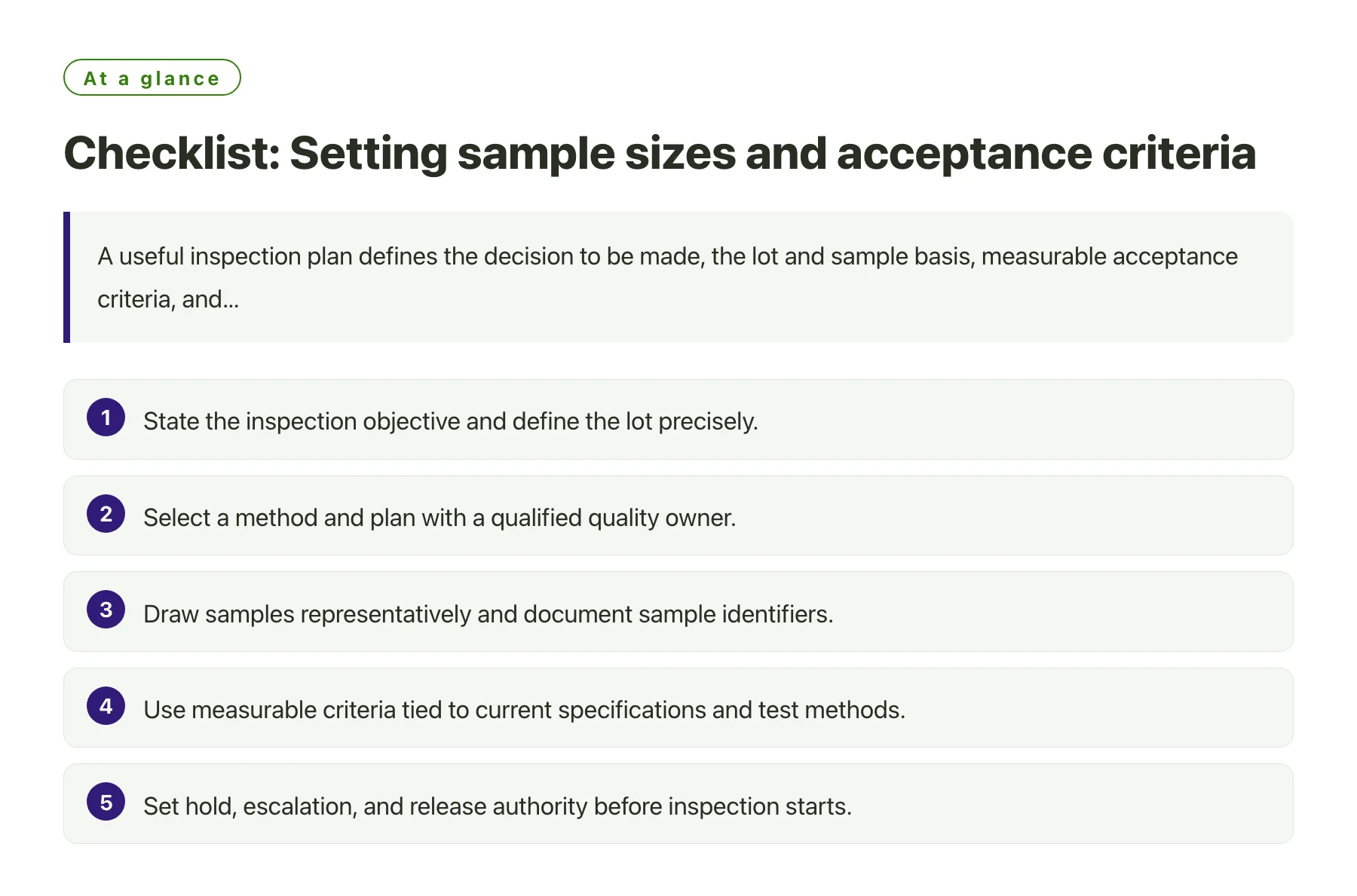
Key takeawaysState the inspection objective and define the lot precisely. · Select a method and plan with a qualified quality owner. · Draw samples representatively and document sample identifiers. · Use measurable criteria tied to current specifications and test methods. · Set hold, escalation, and release authority before inspection starts.
Sample size alone does not make an inspection plan. The method, lot, acceptance rules, and actions after a finding must also be clear.
Define the decision the inspection must support
Before selecting a sample size, state what the inspection is intended to decide: whether a shipment can be released, whether a process needs corrective action, whether selected characteristics meet requirements, or whether a lot requires additional review. The objective determines what characteristics to check, how a sample is selected, and what happens when a result falls outside criteria.
Separate defect categories by consequence and specify examples. A critical safety or regulatory concern may require a different response from a cosmetic issue or minor workmanship deviation. Have the product and quality owners set the classification and disposition route. Do not use a generic severity label without linking it to a concrete characteristic and response.
Define the lot: product model, revision, production period, supplier site, quantity, and traceable batch. If several configurations or lots are mixed, decide whether they need separate inspection samples. A sample from one group should not be assumed to represent another configuration that uses different materials or processes.
Choose a method and sample basis
Acceptance sampling by attributes records whether each sampled unit has a characteristic or defect. Standards such as ISO 2859-1 provide sampling schemes indexed by acceptance quality limit for lot-by-lot inspection. The 2026 edition is the current published edition and introduces revised guidance and procedures; the responsible quality owner should consult the applicable standard directly when selecting a plan.[1]
A sampling plan needs more than an AQL value. Specify the standard and edition, inspection level, sample size or code letter, acceptance and rejection numbers, switching rules where applicable, and how the lot is formed. Do not copy a sample table without checking the conditions and purpose of the plan. Acceptance sampling supports a lot decision; it does not guarantee zero defects or describe every unit.
For measured characteristics, define the measurement method, equipment, calibration status, tolerance, and how results will be evaluated. A plan for attribute checks may not be suitable for dimensional data or specialized testing. Assign the method to a competent inspector or laboratory where required.
Make the sample selection representative
State who draws the sample, when it is drawn, and how units are selected from the defined lot. If cartons are chosen only from the front of a pallet or one production line, the sample may miss variation across time, location, or configuration. Use a documented random or stratified method suitable for the product and plan.
Decide whether goods must be fully produced and packed before inspection. A finished-goods sample can reveal packaging and labeling issues that a line-side sample cannot. If inspection occurs before completion, document what remains unchecked and decide whether a final verification is needed.
Identify tools, access, destructive testing permissions, and reference documents. Provide the inspector with the approved specification, drawings, approved sample, defect examples, and current revision. Keep sample identifiers and photographs linked to the report so another reviewer can trace the result.
Write measurable acceptance criteria
Replace subjective phrases such as good appearance, smooth operation, or acceptable color with observable criteria. State dimensions and tolerances, functional steps, materials, label text, finish references, packaging condition, and performance thresholds where appropriate. If the buyer has not defined a limit, route the decision to a qualified owner before inspection begins.
Describe the test setup and conditions. Identify the equipment, operating mode, load, environment, duration, and result format where those details matter. Use calibrated instruments for measurements that depend on them. Do not ask an inspector to infer requirements from a product page or a verbal explanation.
List the evidence to be returned: lot and sample identifiers, quantities checked, results by characteristic, defects by category, deviations, photographs, documents reviewed, limitations, and disposition recommendation. Specify how nonconformities are contained and who can authorize rework, replacement, concession, or rejection.
Set escalation and release rules
Before sampling, decide what happens when the acceptance number is exceeded or a serious issue appears. Options can include holding the lot, expanding the investigation, sorting, corrective action, rework, retest, or buyer review. Name the person with authority to choose and define how supplier responses are documented.
An inspection report should state the plan used and its limits. It should not imply that every item was checked when only a sample was reviewed. Acceptance under a sampling plan is one input to release, alongside document review, product-specific requirements, and any required regulatory or technical approval.
For finished-goods inspection before shipment, buyers can define sample basis, characteristics, defect classes, acceptance numbers, report contents, and escalation owners before goods are ready. Agree on the inspection timing and whether packing, labels, and shipment quantity are included in the scope.
Sources
Frequently asked questions
Does acceptance sampling prove that every unit is defect-free?
No. It supports a lot decision based on a sample and defined rules. The plan has limits, and other product, process, or regulatory checks may still be required.
Can buyers choose a sample size without defining the lot?
No. The plan needs a clear lot basis, including product configuration, revision, quantity, site, and production period, so the sample relates to the goods under review.
What is needed besides an AQL value?
Specify the sampling standard and edition, inspection level, lot, sample method, sample size, acceptance and rejection numbers, switching rules, and escalation process.
Who should approve inspection criteria?
The buyer’s qualified product or quality owner should define requirements and disposition authority before the inspector begins the assigned checks.